Malnus MANET: Mesh Communication When Infrastructure Fails
When disaster hits or operations move into unknown areas, normal communication often breaks down. Our Mobile Ad-hoc NETwork (MANET) system creates a self-healing mesh network that works in collapsed buildings, underground facilities, and dense urban areas.
The Problem
In emergencies, the environment changes constantly. First responders and rescue teams move through buildings where signals get blocked by concrete walls, steel, and debris. Traditional radios that need fixed infrastructure or line-of-sight can’t keep reliable connections in these conditions.
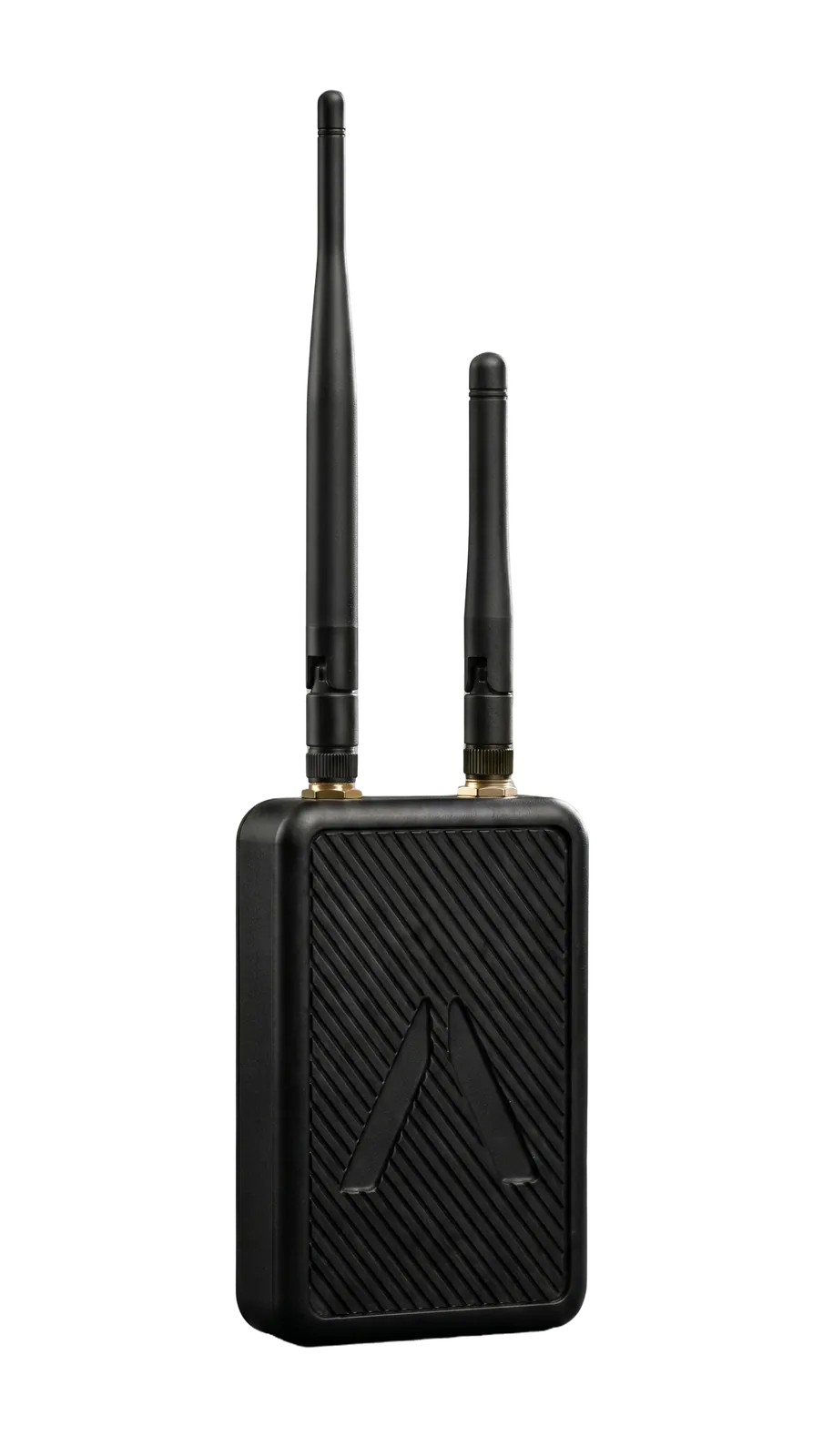
The Trade-off Problem
Existing systems force you to choose between:
- Range: How far signals travel
- Battery Life: How long devices last
- Data Rate: How much data you can send
Improving one usually makes the others worse. Also, routing protocols built for stable networks break when nodes move constantly and signal paths change every second.
Our Solution: Self-Healing Mesh
The network uses a mesh topology where every device acts as both an endpoint and a router. If one path fails, the network finds alternative routes through other nodes automatically, so messages still get through.
Radio Technology
We use LoRa (Long Range) radio and other alternative technologies where needed, all within one system. LoRa works well for disaster response, but we also use other radio technologies when they’re better suited to specific scenarios. The key is that all these technologies work together in a single integrated system.
Why LoRa works for disaster response:
- Penetration: Goes through concrete, steel, and debris better than most radios
- Range: Several kilometres even in obstructed areas
- Battery Life: Lasts longer than other options
- Flexibility: Can be configured for different scenarios
The radio technology matters, but the routing that manages the mesh matters more.
Adaptive Routing
Standard mesh routing protocols assume fixed network conditions. We’ve built adaptive routing protocols that change based on real-time network conditions and what you need the network to do.
Configurable Routing Modes
You can configure the system before or during operations:
Stability Mode: Keeps multiple backup paths, prioritising reliability over speed.
Throughput Mode: Uses shortest paths and maximum data rate when you need bandwidth, like streaming audio or images.
Energy-Efficient Mode: Reduces beacon frequency and uses sleep cycles to extend battery life while still handling urgent messages.
Hybrid Mode: Combines proactive and reactive routing, balancing network discovery with response time.
Key Features
Self-Healing Architecture
When a node fails or signal paths change, the network automatically discovers new routes within seconds. No central controller required; every device participates in maintaining connectivity.
DAPS Integration
Our mesh network works with MALNUS DAPS positioning systems, combining communication with personnel tracking in places without GNSS.
Multi-Hop Scalability
Messages automatically relay through multiple devices, extending range far beyond single-hop limitations. A team of 10 responders creates a network with 10x the coverage area of individual radios.
Modular Design
Our hardware platform supports multiple radio frequencies and protocols. Field-swappable modules allow teams to adapt to different operational requirements without replacing entire systems.
Real-Time Adaptation
The network constantly measures link quality, battery status, and traffic, automatically adjusting routing based on current priorities.
Technical Specifications
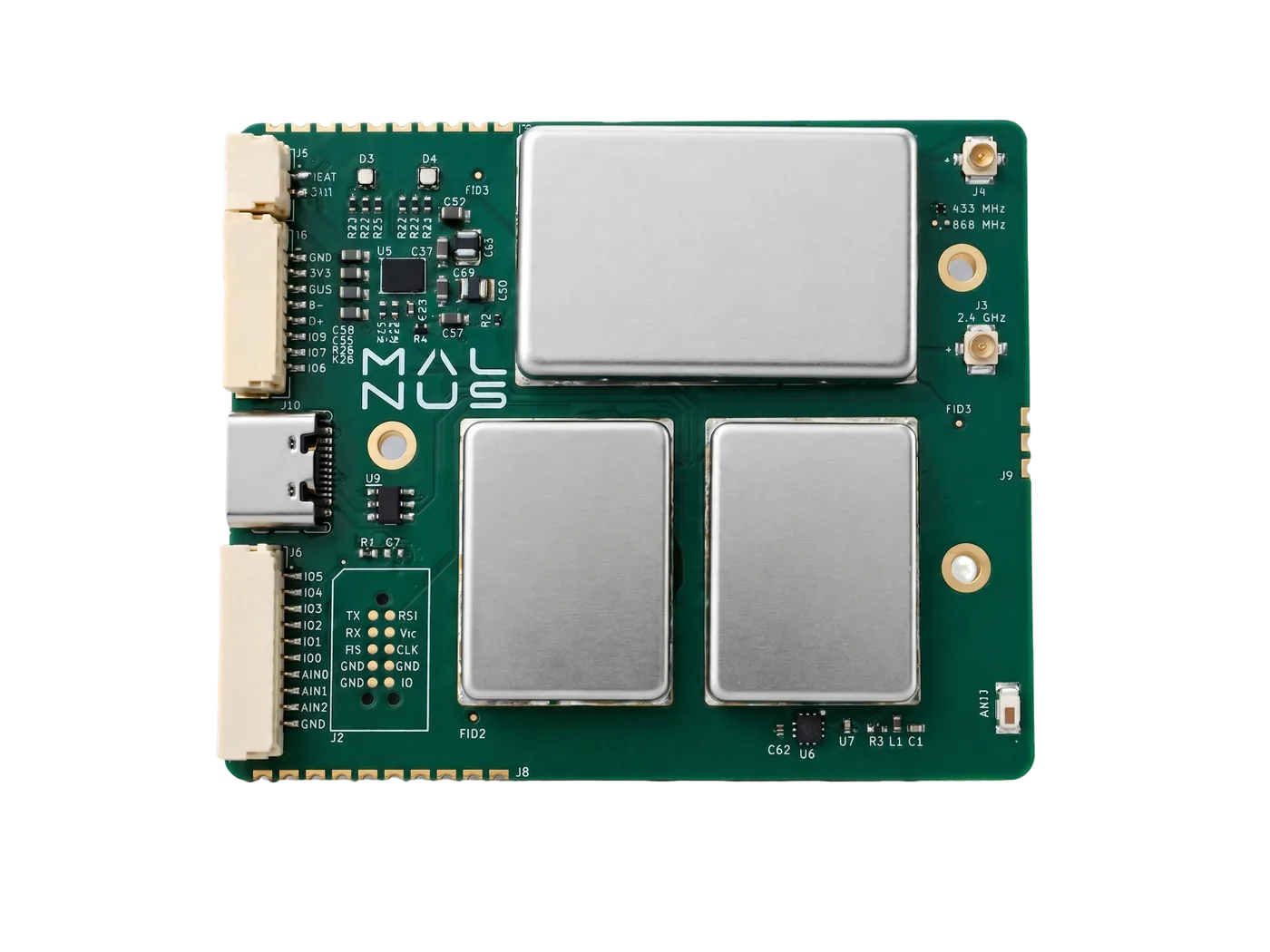
Hardware Platform
- Modular RF Design: Swappable radio modules for different frequency bands
- Mesh Unit PCB: Compact, ruggedized design for field deployment
- Power Consumption: Runs for 24+ hours on standard batteries
- Environmental Rating: Water-resistant, shock-resistant enclosure
Network Performance
- Range: Up to 5km in clear conditions, 500m+ through concrete structures
- Latency: <500ms multi-hop for critical messages
- Throughput: Adaptive 1-500 kbps depending on network conditions
- Node Capacity: Supports 50+ active nodes per subnet
- Reliability: >99% message delivery with mesh redundancy
Routing Protocols
- Base Technologies: Algorithms inspired by standard protocols but taken further
- Our Improvements: Protocol switching, scenario-aware optimisation
- Decision Metrics: Link quality, battery status, traffic load, mission profile
- Convergence Time: Fast route discovery after topology changes
Applications
Disaster Response & Emergency Services
- Search and rescue operations in collapsed structures
- Firefighter communication in buildings and tunnels
- Earthquake and disaster zone coordination
- Hazmat team operations with limited external infrastructure
Industrial & Infrastructure
- Underground mining communication and tracking
- Tunnel construction and maintenance operations
- Large-scale facility security and coordination
- Pipeline inspection and maintenance crews
Urban Operations
- Multi-building security coordination
- Event management in complex venues
- Urban exploration and surveying
- Temporary infrastructure for mobile operations
Space & Robotics
- Robotic exploration missions in GNSS-denied environments
- Space mission coordination and tracking
- Autonomous system communication networks
- Multi-robot coordination and swarm operations
Why Our Approach Works
Instead of using one fixed routing protocol, we built a system that watches the network and picks routing strategies in real-time.
Traditional radio technologies work well when you pair them with better routing. The bottleneck in mesh networking isn’t the radio; it’s the routing intelligence.
What Makes Us Different
Adaptive Routing: Competitors use fixed protocols. Ours can be configured for what you need.
Works with DAPS: Designed to work with MALNUS DAPS for combined (and mutually enhanced) communication and tracking.
Research-Based: Our protocols are tested and based on research, not just industry standards.
Configurable: Teams can prioritise stability, throughput, or battery life without changing hardware.
Built on Proven Tech: We use proven protocols and improved them.
Built for Real Conditions
As emergency scenarios get more complex, static communication systems can’t keep up. MALNUS MANET adapts to changing conditions and keeps working when things go wrong.
Whether coordinating first responders in disasters, keeping connectivity underground, or operating without GNSS, our mesh network keeps critical communication working when it matters.
Need mesh networking for your operations? Contact us to discuss your requirements.